JUNE 2026 · SAN FRANCISCO
LUCIFER PANAMERICANA 993
The Ultimate Outlaw
JUNE 2026 · SAN FRANCISCO
The Ultimate Outlaw
Philosophy
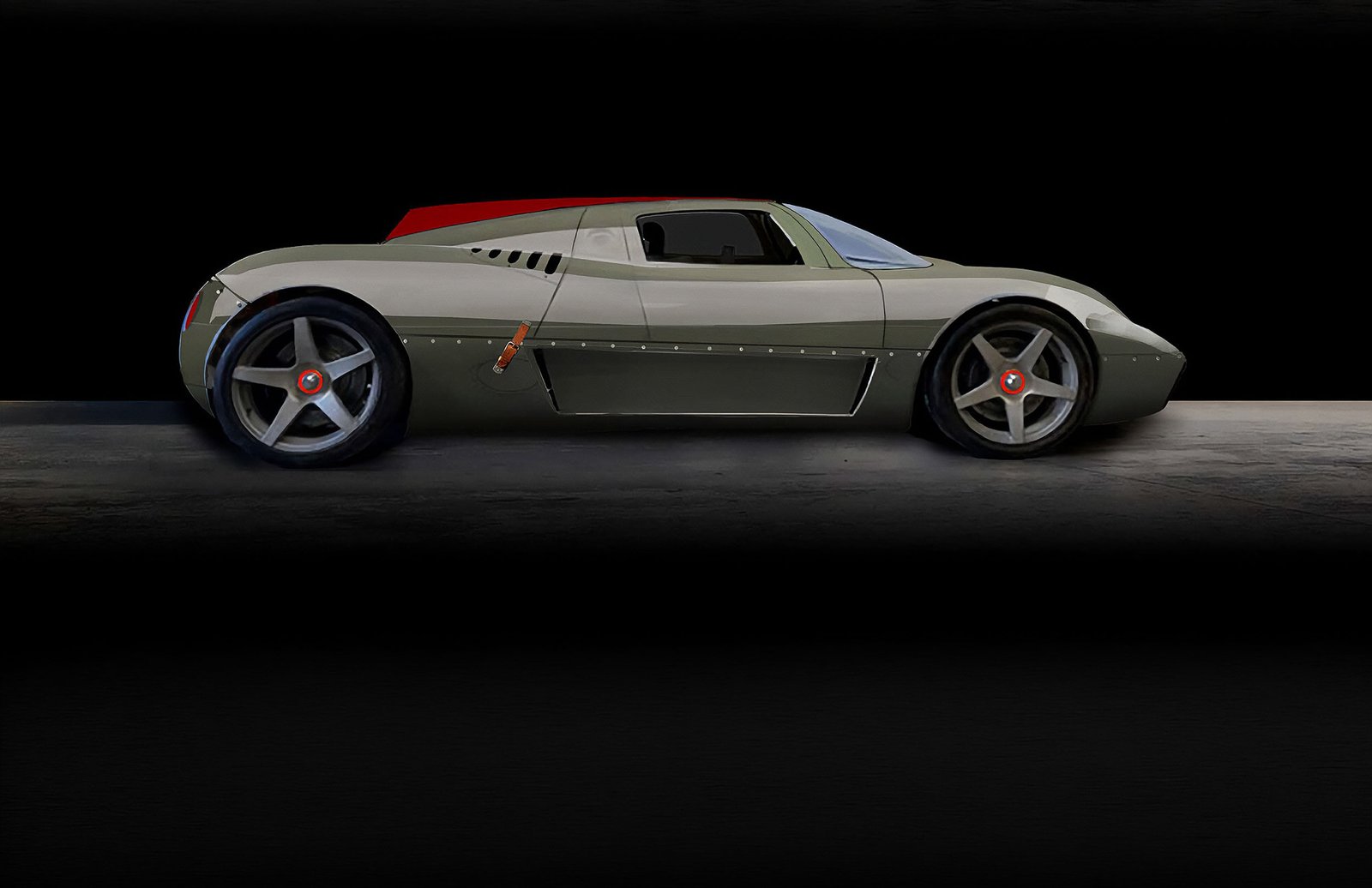
The Panamericana 993 begins with one of the most admired engines in motoring history — a naturally aspirated, air-cooled flat-six — and works outward. Every surface, every joint, every rivet exists to serve a single, uncompromising idea: a completely original, road-legal analog sports car, built for a driver who wants to feel the road, not manage it.
A fully bespoke, all-aluminum semi-monocoque chassis. Unique suspension geometry, engineered from nothing. State-of-the-art brakes. A hand-formed aluminum body, riveted panel by panel in the tradition of the coachbuilders who shaped the great mid-century racers — then given a livery pulled straight from the Carrera Panamericana itself.
“A completely new analog car to provide the unique experience of enjoying the art of real driving.”
— Alberto Hernandez Mendoza, Designer
Design Evolution
Every curve was drawn and redrawn by hand before it was ever cut in aluminum — a process that ran, marker and pen, across more than a year of development.
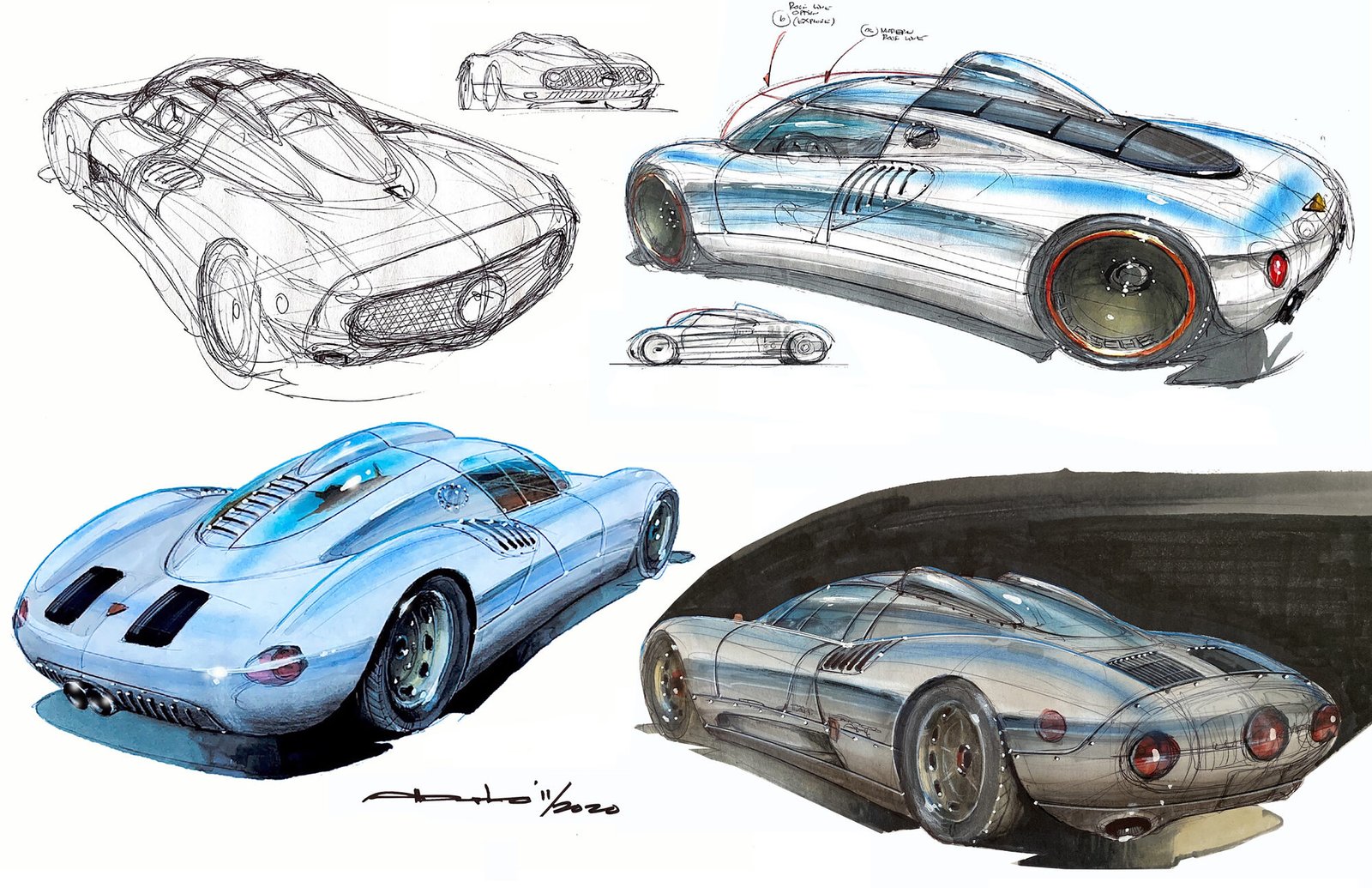
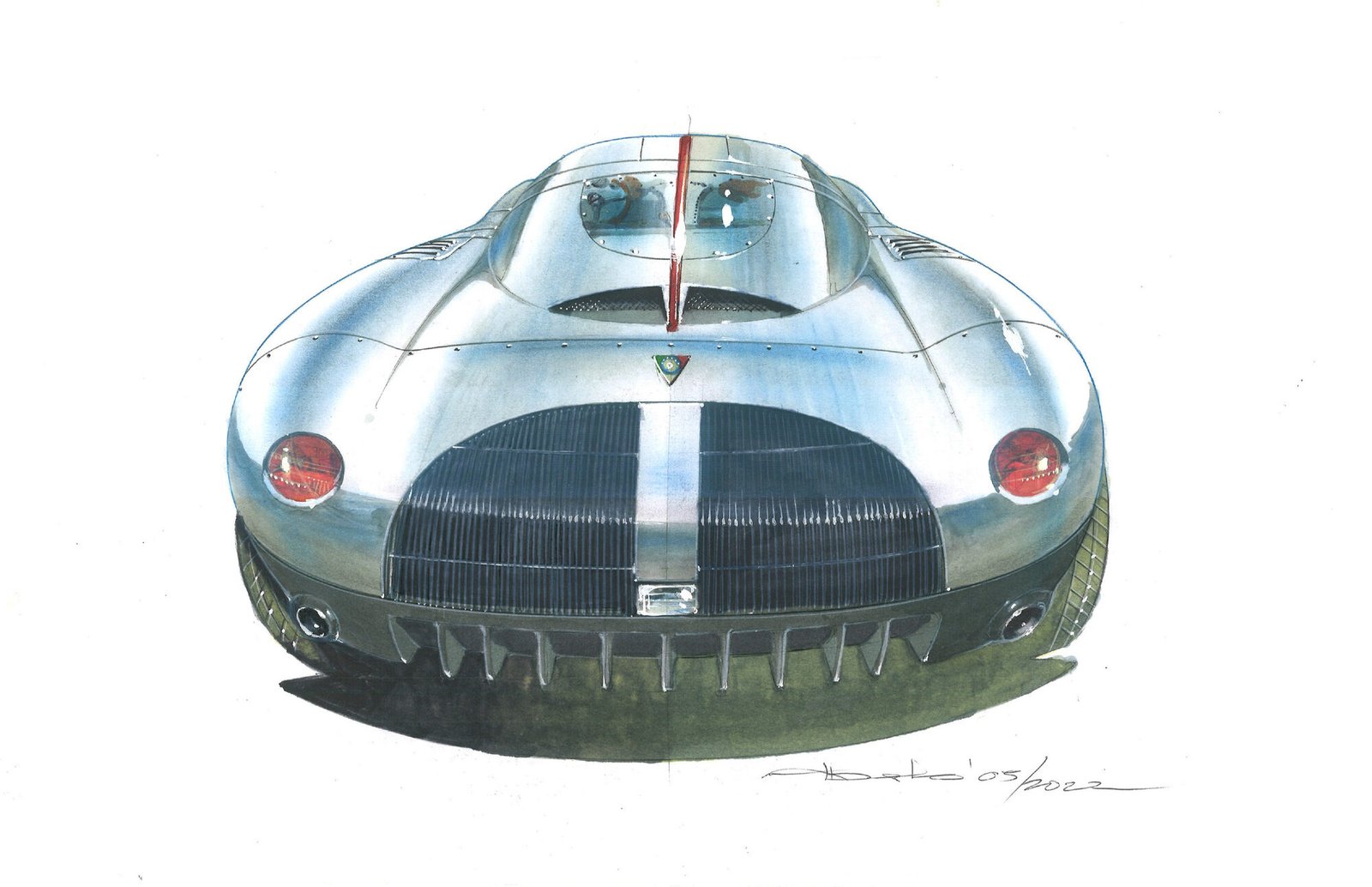
Early explorations of proportion and stance — the long tail, the low glasshouse, the roofline options weighed against each other before a single body panel existed.
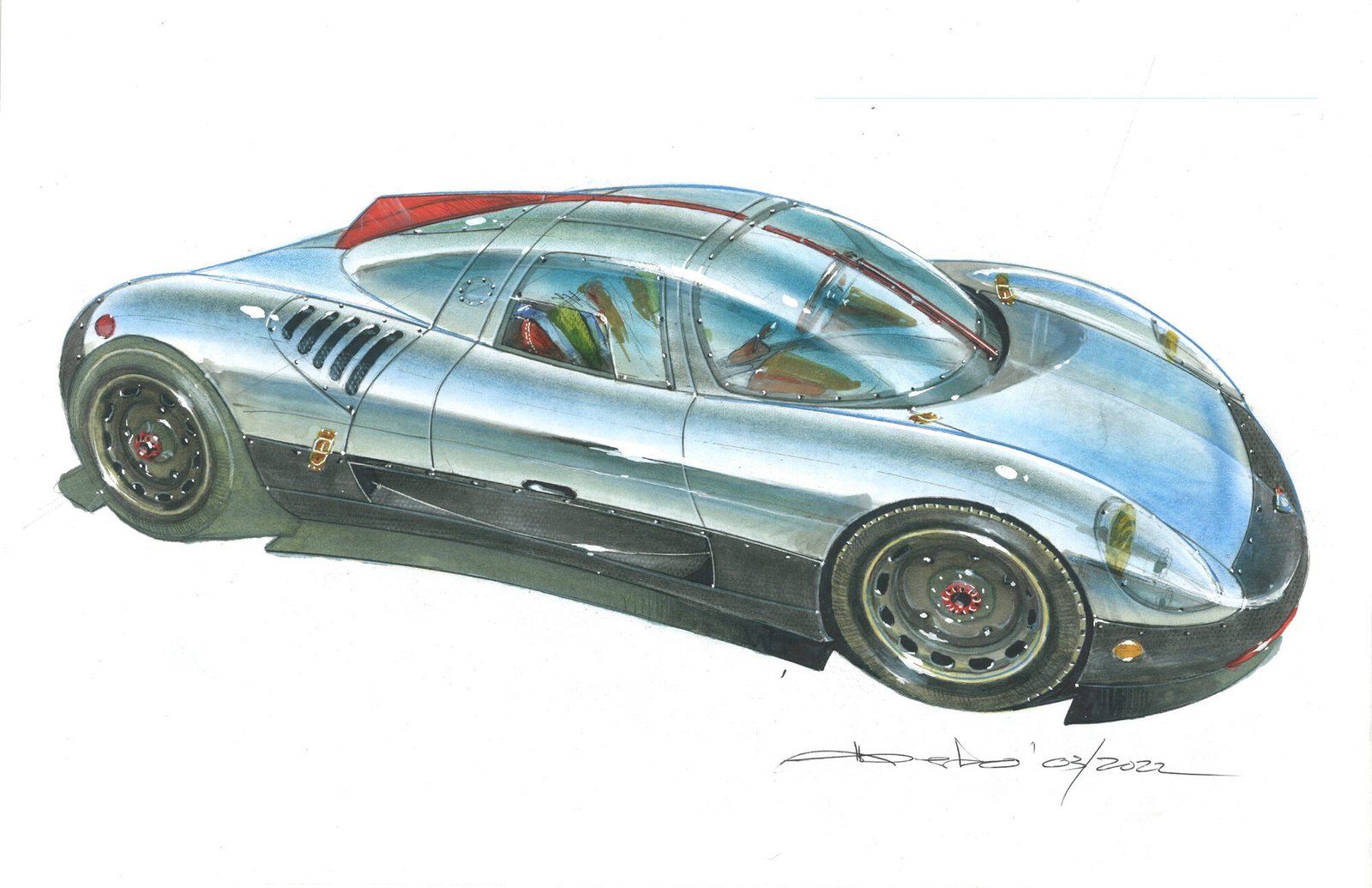
The final concept resolves into brushed aluminum over a carbon undertray, riveted seams tracing the body like the skin of a vintage racing aircraft.
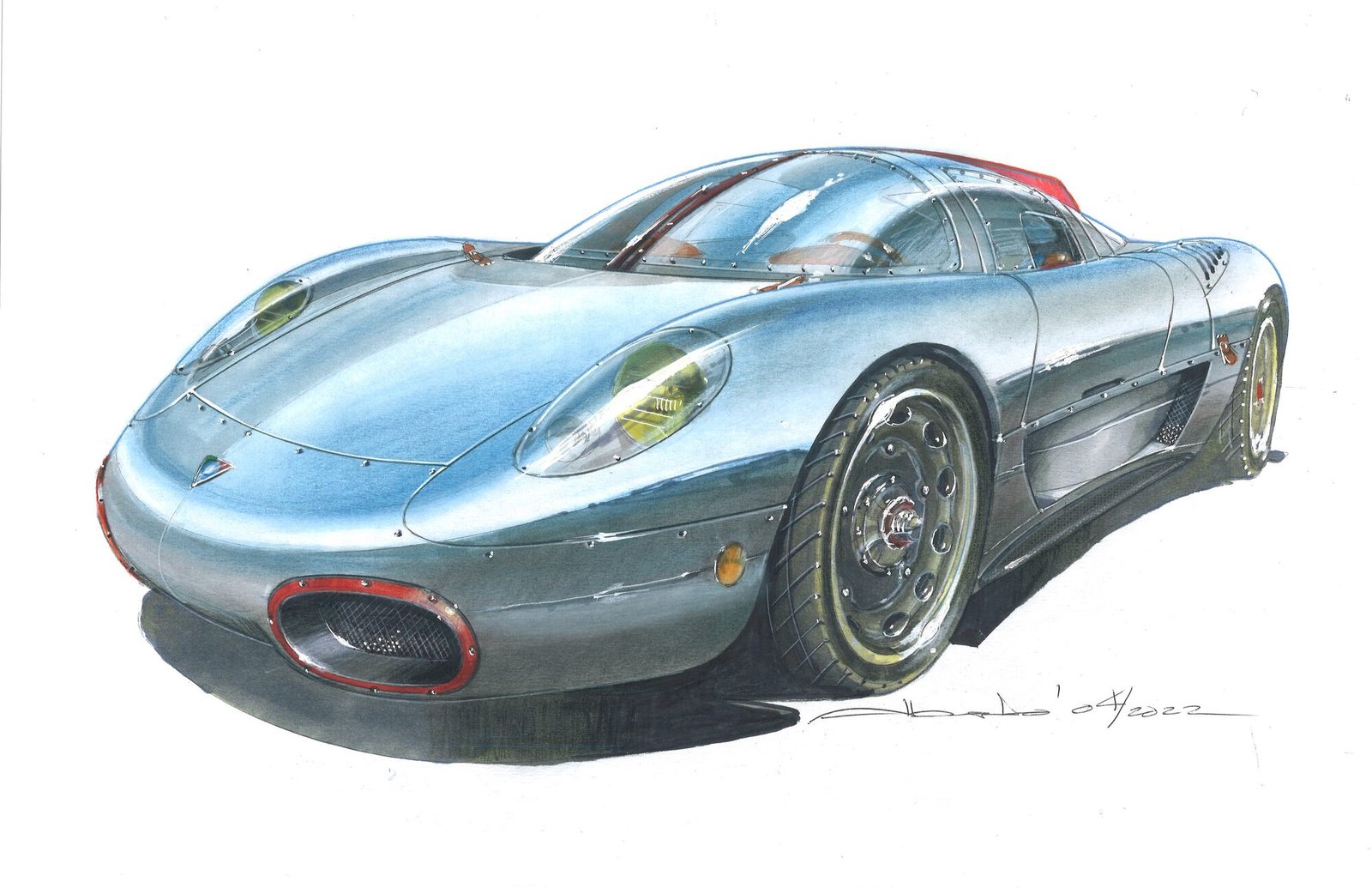
The nose is set low and wide, the headlamp domes recessed under glass in a nod to the streamliners that once ran flat-out across the Bonneville salt.
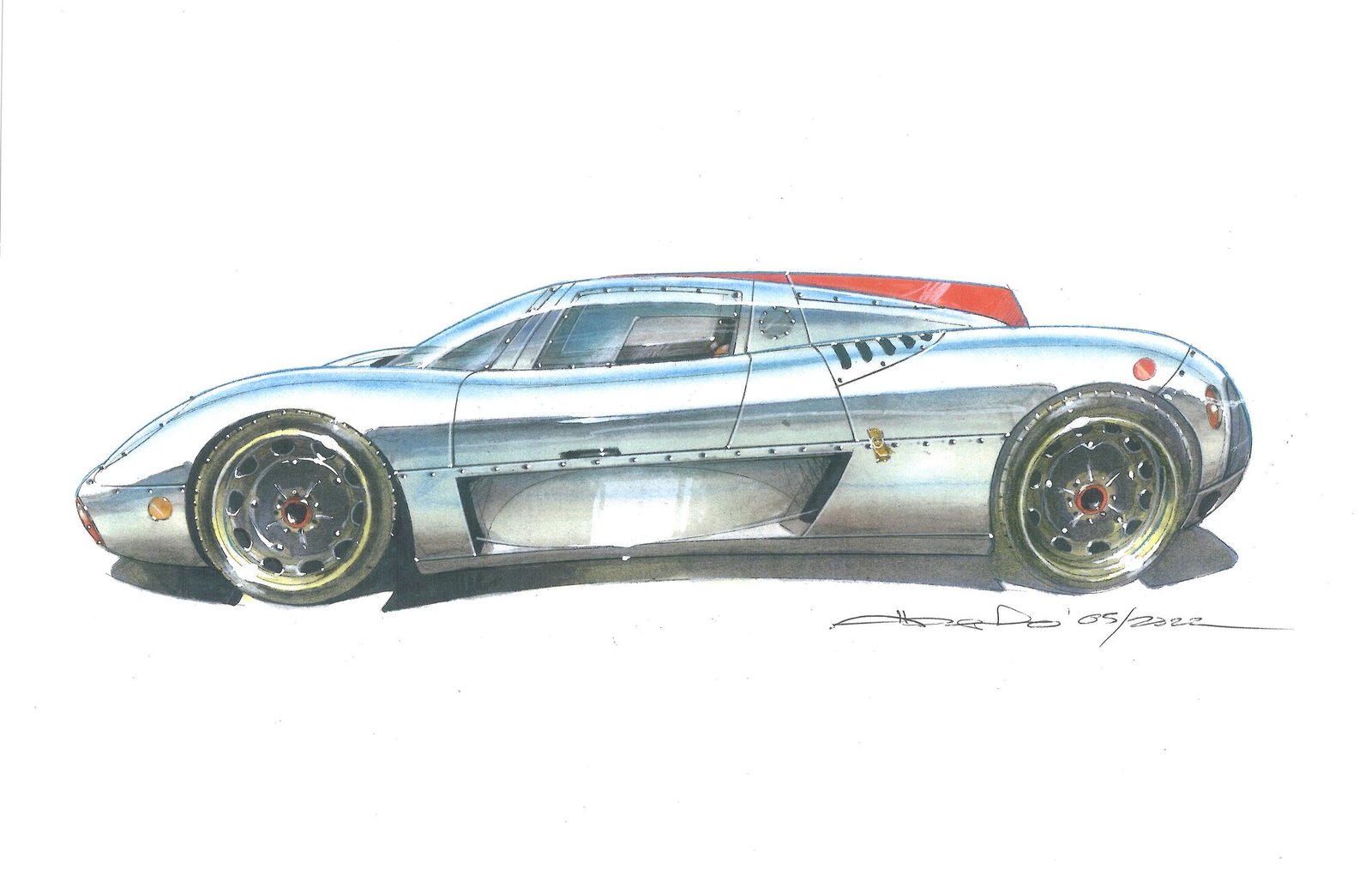
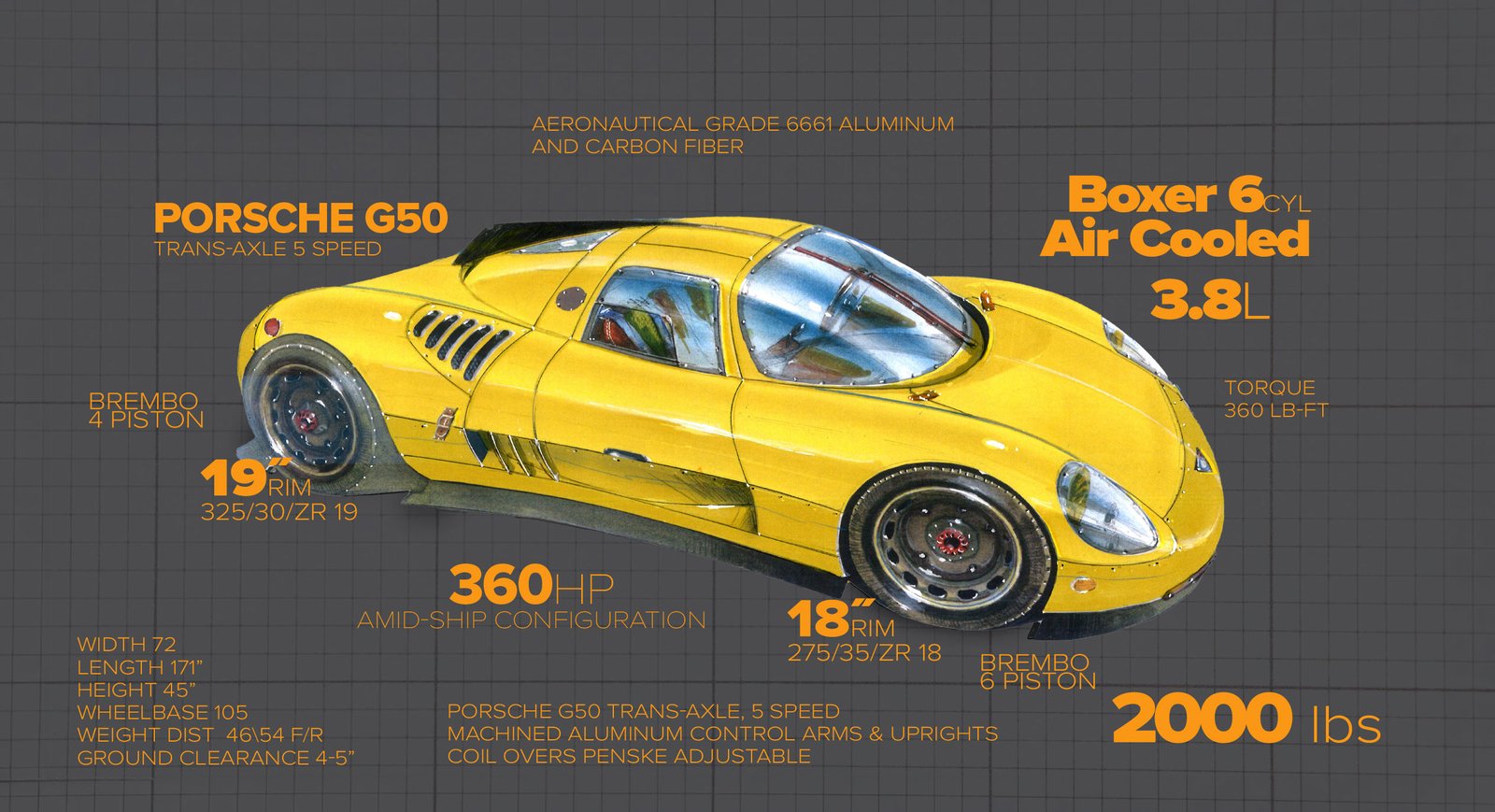
The last pass before tooling: the red roof panel fixed, the rivet line resolved along the rocker, the silhouette locked for good.
Heritage
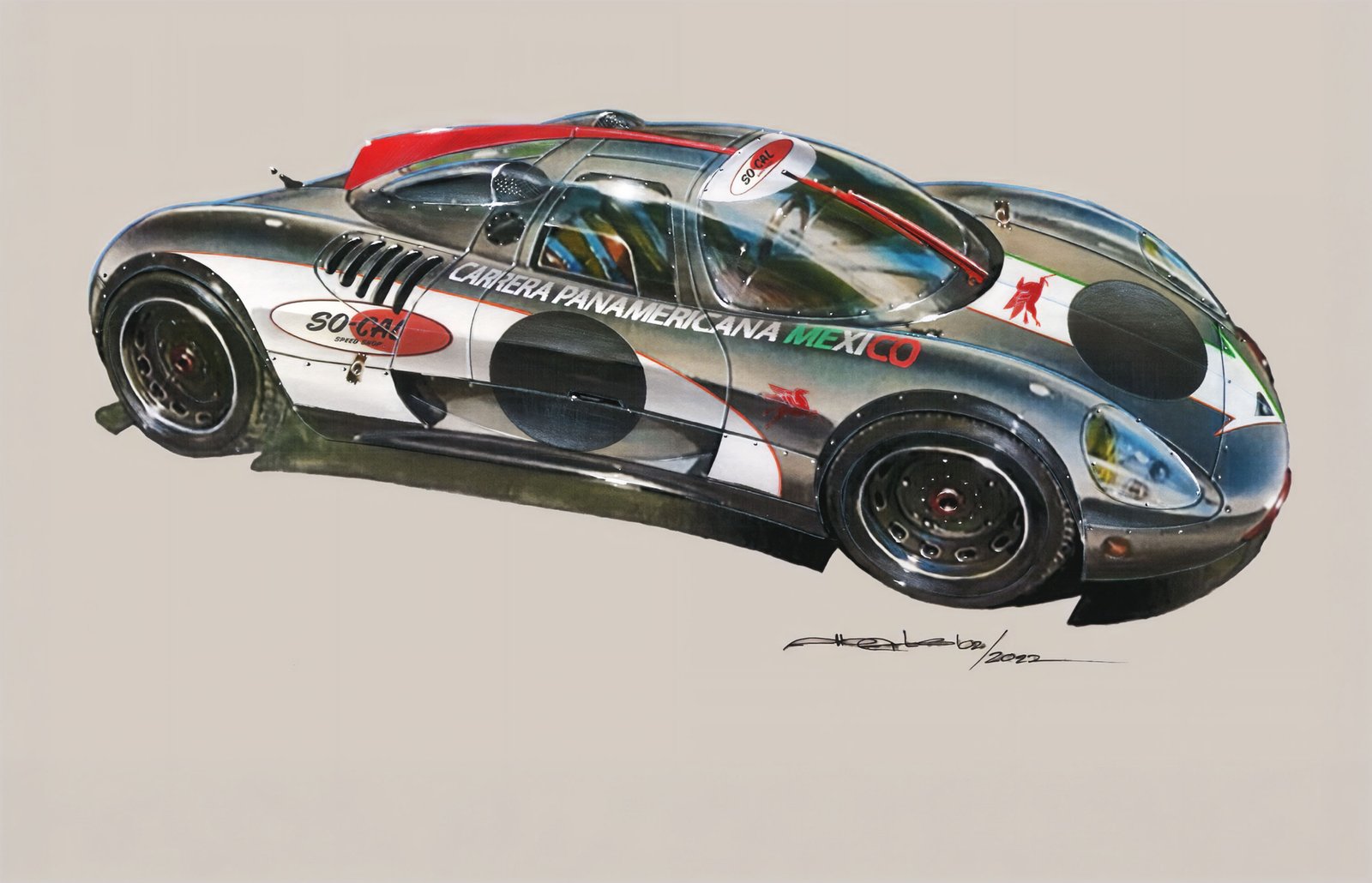
The Carrera Panamericana ran the length of Mexico on open public roads — no closed circuit, no margin for error. The Panamericana 993 wears that history on its flank: a livery built the way a privateer entry was built, numbers and sponsor marks laid over bare aluminum, not painted on but earned.
Final Form
Engineering
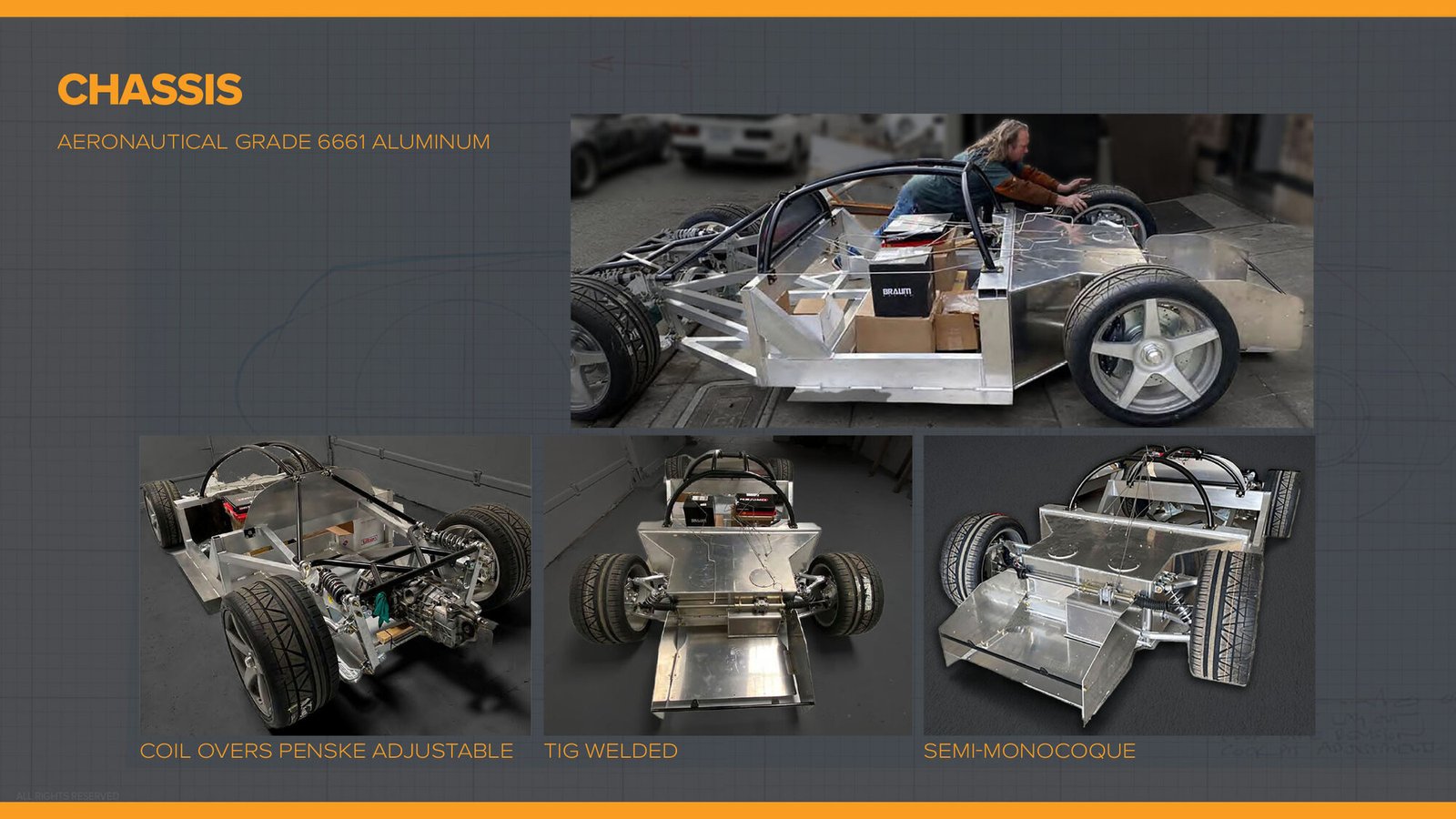
The chassis is a semi-monocoque, TIG-welded from aeronautical-grade aluminum — the same rivet-and-panel construction language carried straight through from the body above it. Penske-adjustable coilovers and machined aluminum control arms sit ahead of Brembo brakes, four-piston in front, six in the rear.
Powertrain
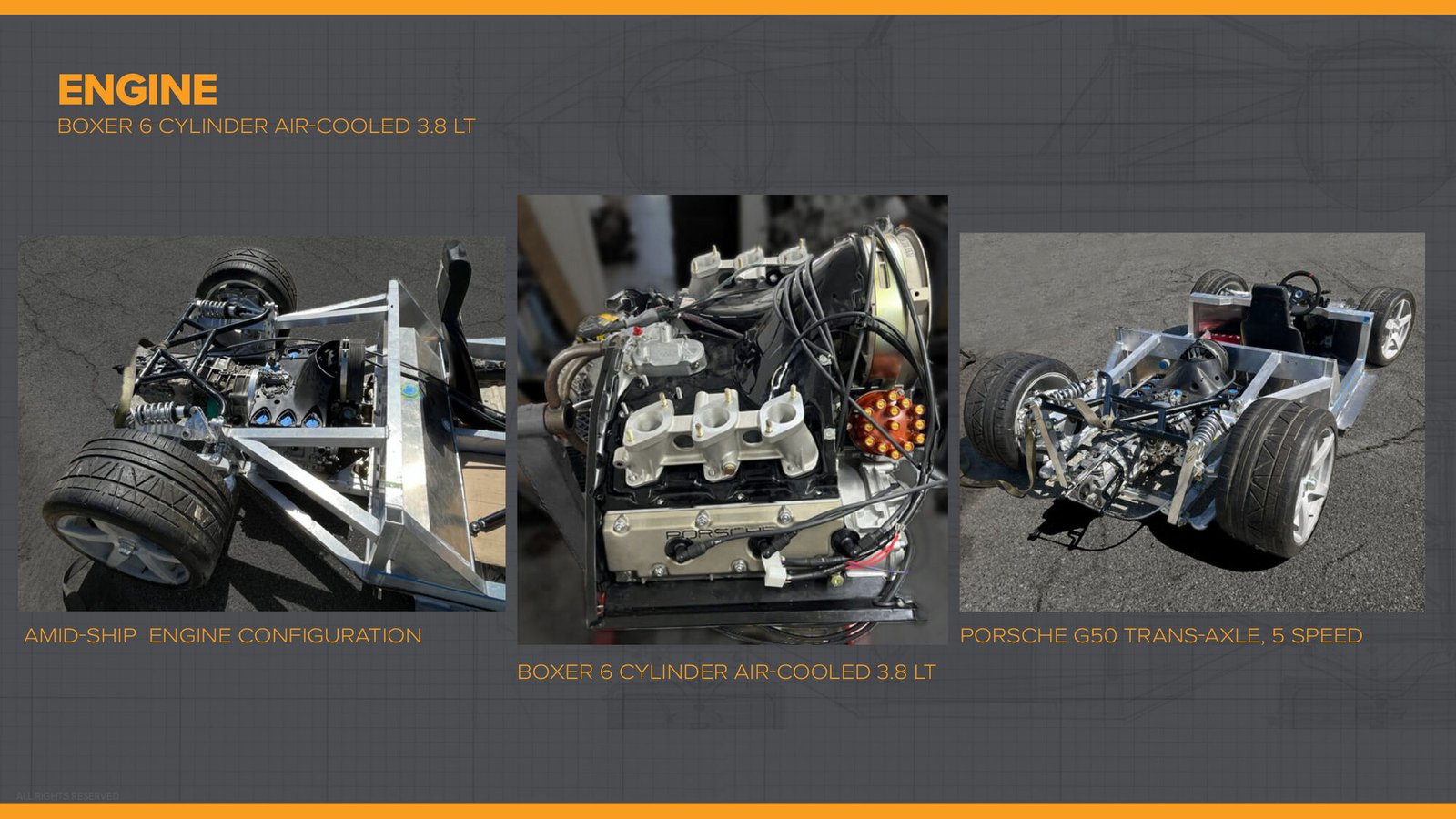
A 3.8-liter boxer six, air-cooled and naturally aspirated, mounted amidships for a driving weight that sits low and centered. Power is sent through a Porsche G50 trans-axle, five-speed, chosen for the mechanical honesty of its shift and the way it puts the driver in direct contact with the road.
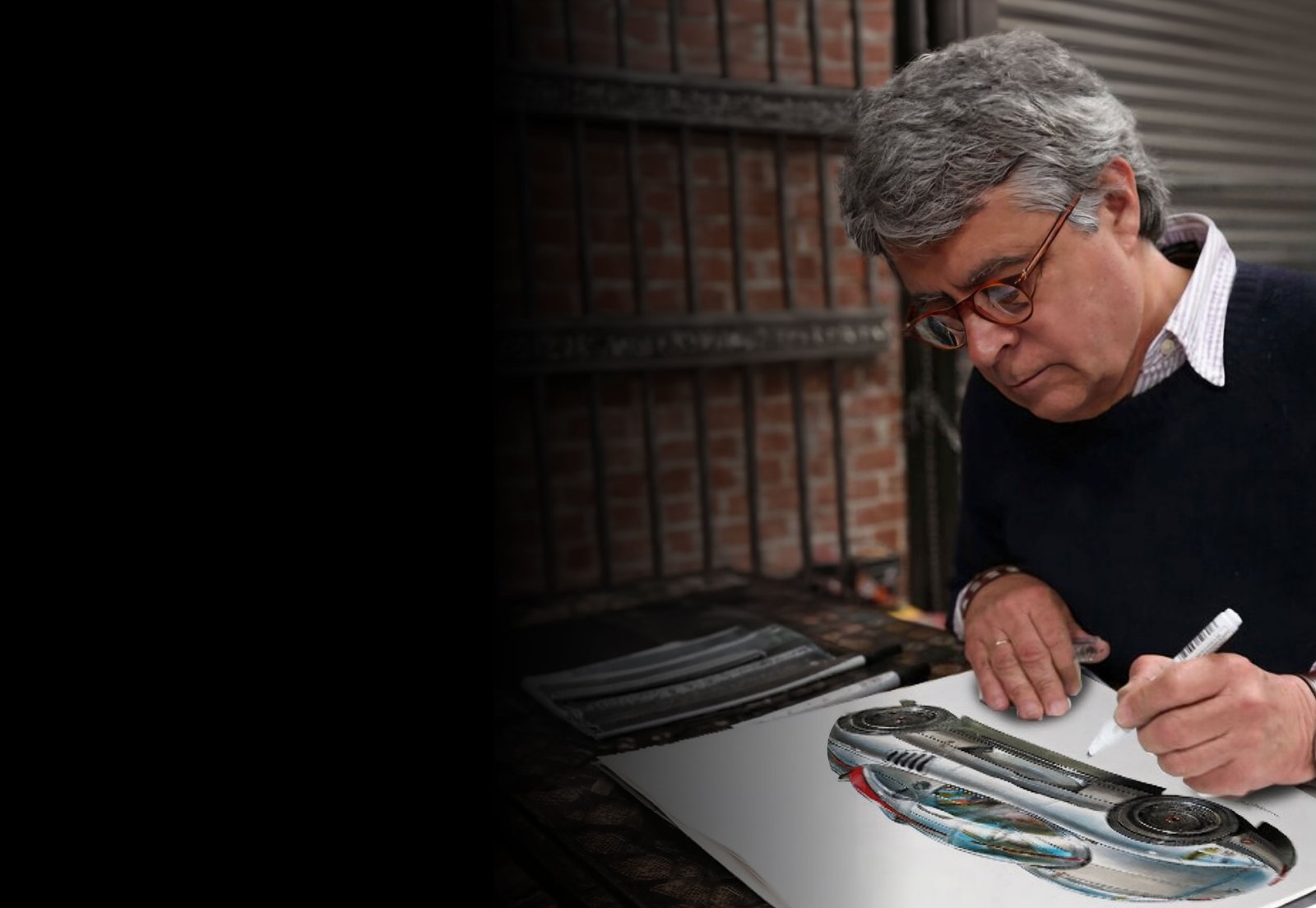
The Designer
Industrial Designer & Automotive Architect — San Francisco, CA
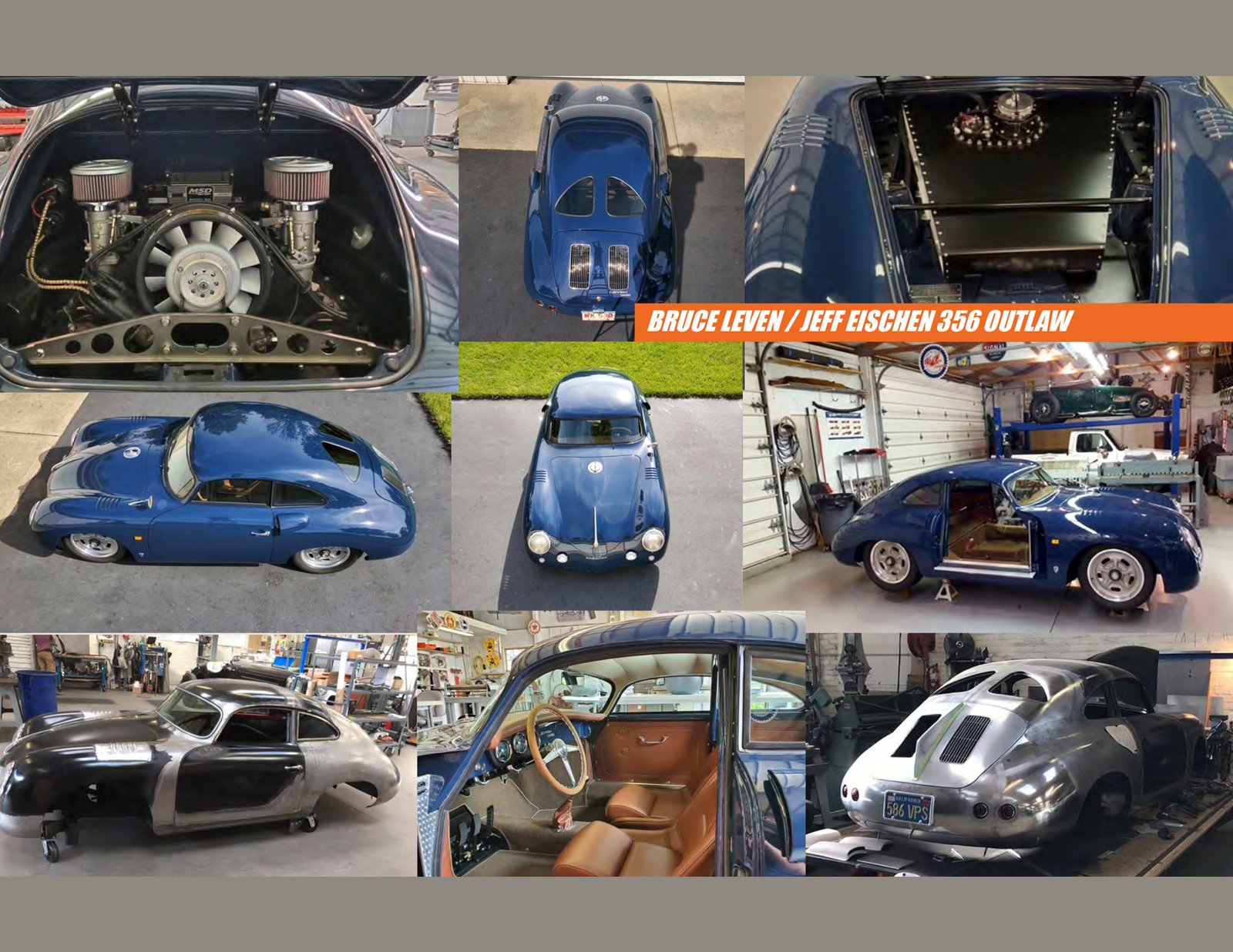
At Moal Coach-builders
Create a unique, one-off Outlaw Porsche 356. The body shell was designed and built at Moal Coach-builders, and the car was assembled and finished by Jeff Eischen, engineer and fabricator extraordinaire.
View Project ↗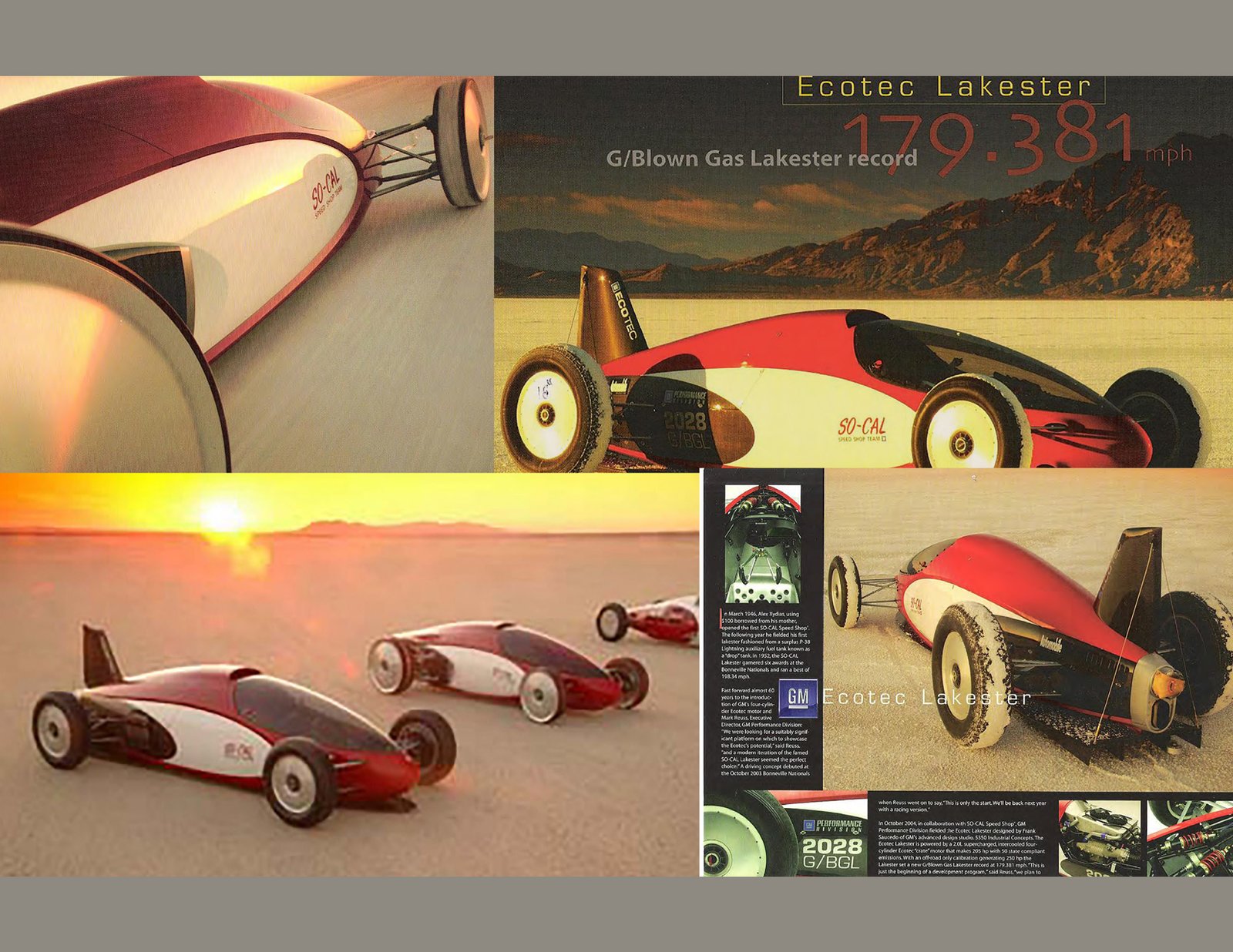
This project was created as an experiment: drive the vehicle from Southern California to Bonneville, race it, and hopefully establish a record — then drive back home. All of these goals were achieved.
View Project ↗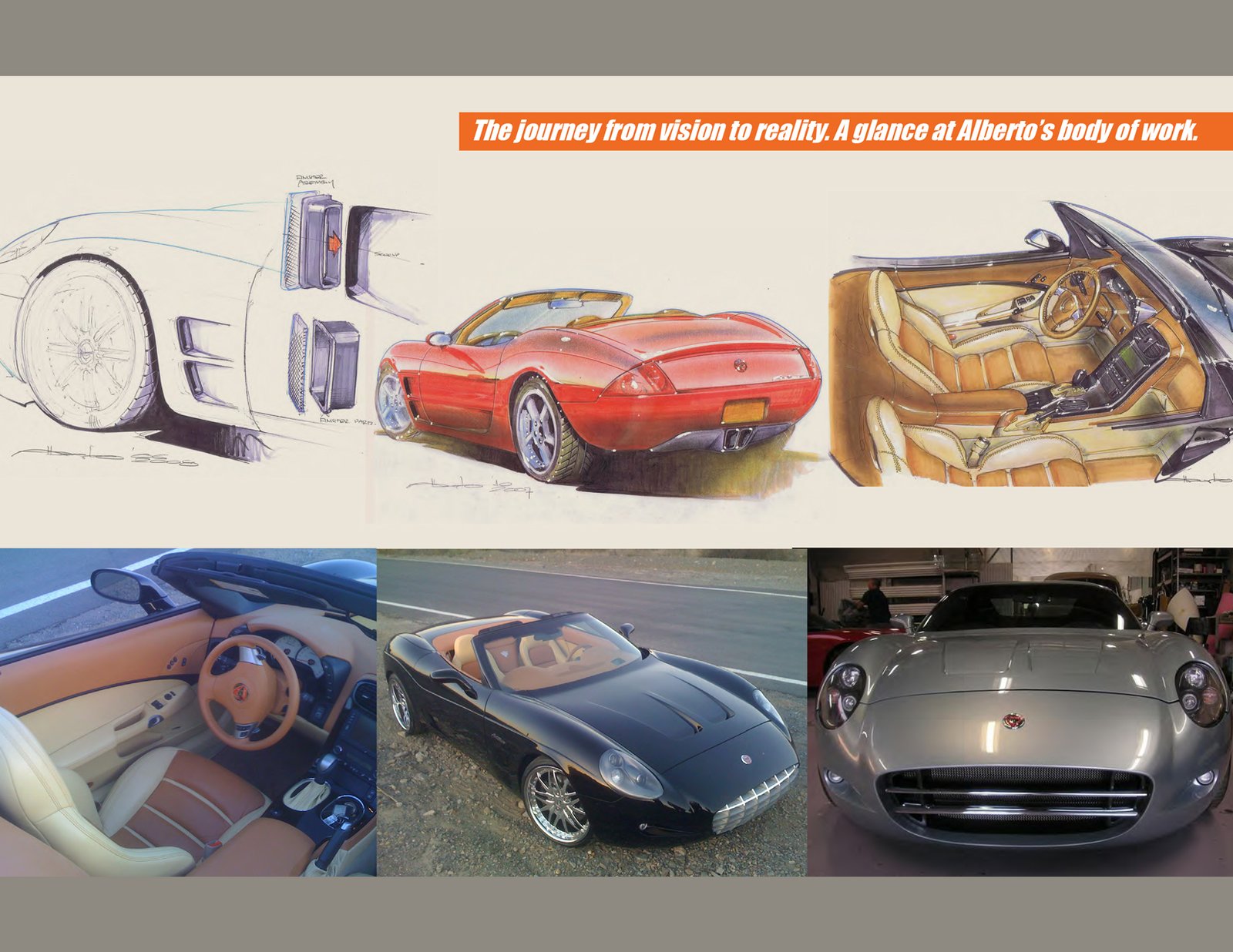
An Italian-flavored body style mounted on a Corvette C6 donor chassis. The interior was designed and detailed in accordance with the exterior design.
View Project ↗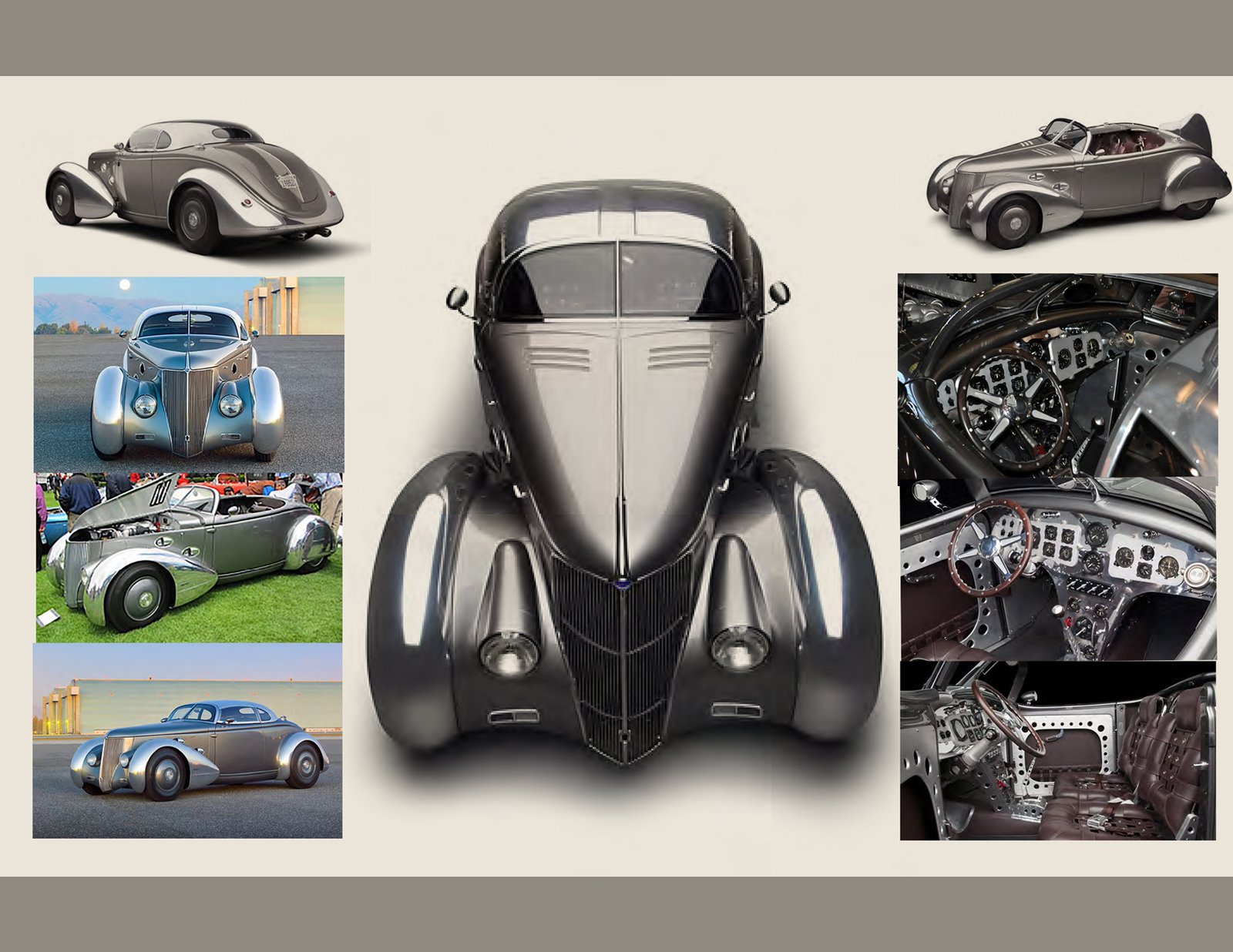
1936 Ford–based phantom concept vehicle
A concept vehicle that could have been built by Ford in the late ‘30s — incorporating the aircraft technology of the era and the streamlining approach used on land-speed-record vehicles.
View Project ↗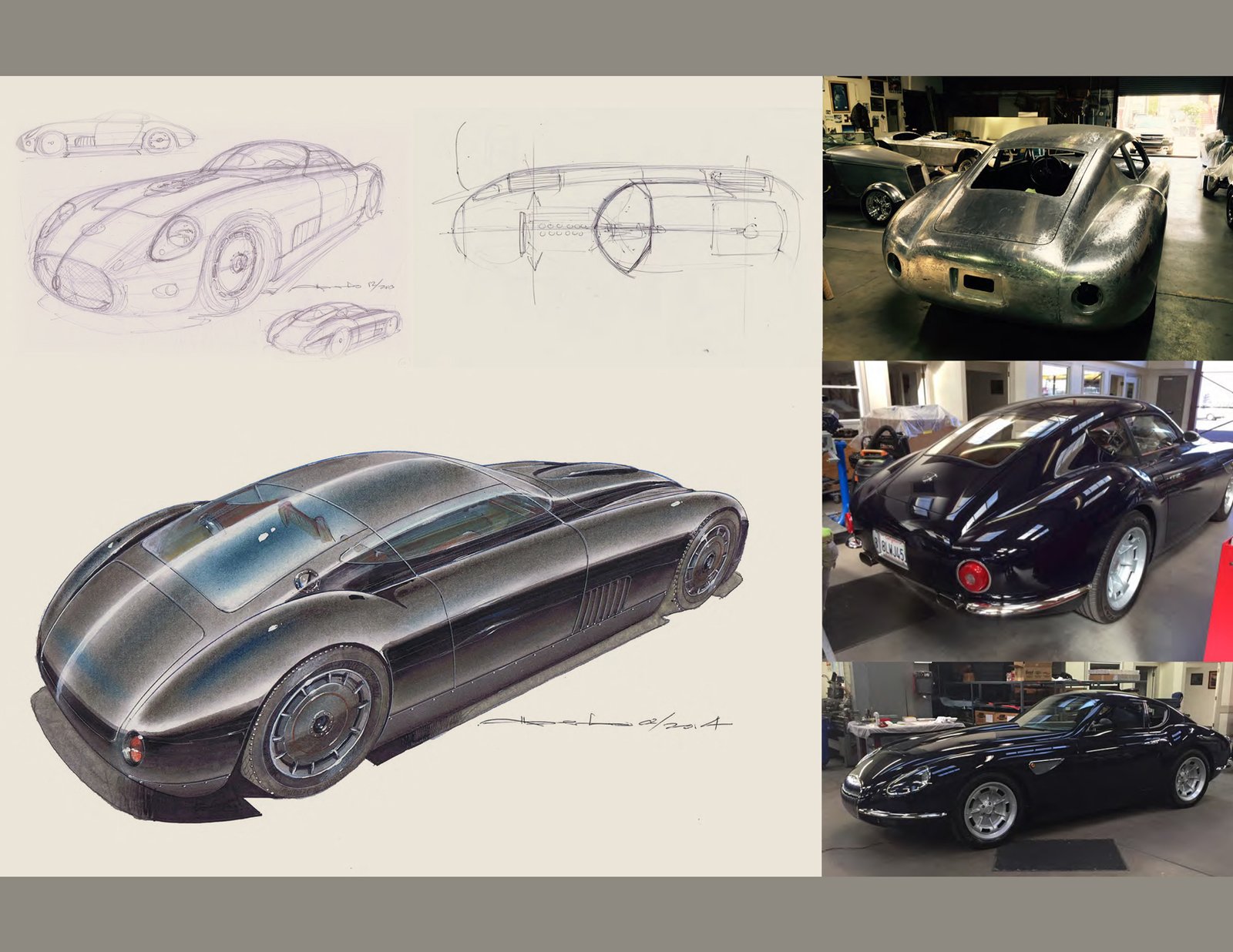
All-aluminum body, vintage-flavor sports car
An all-aluminum body, one-off car powered by a V12 Falconer engine, built at Moal Coach-builders in Oakland, CA. Body panels by Jimmy Kilroy.
View Project ↗Career & Credentials
Recognized throughout the automotive industry as one of the most accomplished illustrators and prototype designers of his era, Alberto has spent over three decades in coachbuilding — as Chief Designer, Senior Project Manager, and Engineering & Prototype lead at some of the most renowned studios and custom shops in the world, among them SO-CAL Speed Shop, Metalcrafters, N2A Motors, and Moal Coachbuilders.
At N2A Motors, as Studio Chief Engineer, he helped develop the Anteros, the 789, and the Devil Ray, among many other design concepts. In August 2022 he joined E-Cite Motors Group as Chief Studio Designer and Engineer. In 2015, he was inducted into the Rod & Custom Hall of Fame.
As a key designer and finisher at SO-CAL Speed Shop, Alberto helped complete the “Indy Speedster” — winner of the 2012 AMBR award at the Grand National Roadster Show.
Commissioned by collector Wayne Carini after he saw Alberto’s illustrations, the 2015 build debuted at Pebble Beach, won its class at the Grand National Roadster Show, and appeared on the cover of The Rodders Journal, issue 71.
While at Moal Coachbuilders, Alberto helped design Dennis Mariani’s streamliner — still the record holder at Bonneville Salt Flats for flathead Ford-powered vehicles, at 312.171 MPH.
Collaborations & clients include Audi, BMW, Bentley, Chrysler, Ford, GM, Isuzu, Kia, Mazda, Mercedes-Benz, Nissan, Smart, Suzuki, Volkswagen, Steve Moal Coachbuilders, Icon, American Sunroof, SO-CAL, Metalcrafters, Boyd Coddington, DZN Studio / ARA, Powers Design International, Design Research, CTEK, Kanter Concepts, and N2A.